
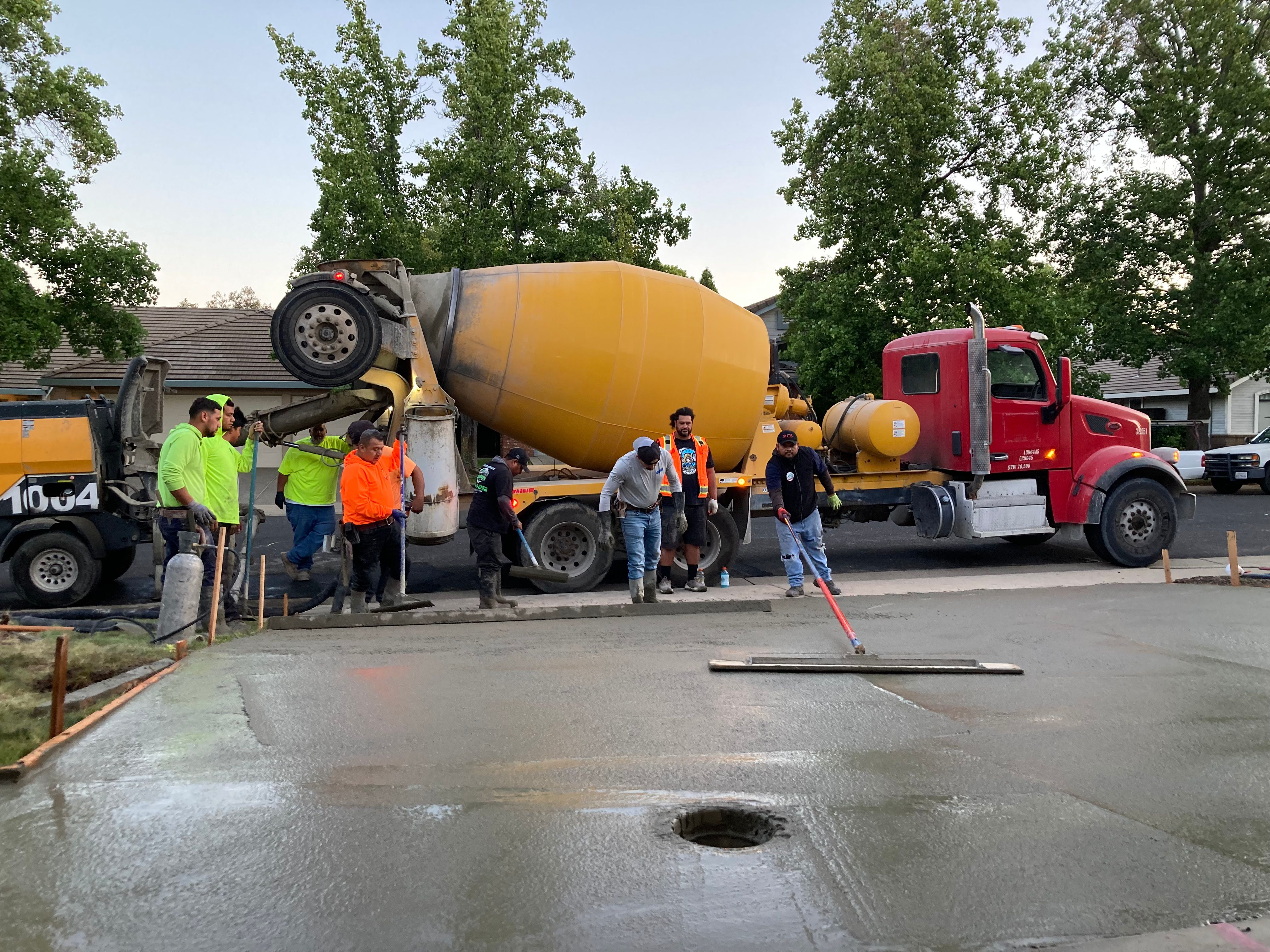
Asphalt is cheaper to install. That's true, and we're not going to pretend otherwise. The question is what happens over the next fifteen Sacramento summers.
How each one handles 100-degree summers
Asphalt softens in sustained heat — it can rut under tires and track onto shoes. Concrete stays dimensionally stable in heat but needs proper jointing so it can move without cracking randomly. In our climate, that heat behavior is the single biggest practical difference.
Maintenance over time
Asphalt wants resealing every few years to stay intact. Concrete wants rinsing, oil control, and resealing only if it's decoratively finished. Over a decade, the maintenance gap usually closes the upfront price gap.
Curb appeal and resale
Asphalt reads as functional. Concrete — especially with a border, a cut pattern, or a stamped field — reads as a design choice. If the driveway is the first thing buyers see, that difference is worth real money at sale.
When asphalt is genuinely the better call
Very long rural approach drives, or a short-term hold on a property, can favor asphalt. We'll say so at the walkthrough rather than sell you a pour you don't need.
The short version
Concrete costs more on day one and usually less by year ten — unless your driveway is very long or very temporary.
Want this answered for your property?
Book a free walkthrough. Sione will look at your site and follow up with a written proposal — no pressure, no obligation.